

Paws & Prepare: Your Stress-Free Guide to a Successful Vet Visit
A trip to the veterinarian doesn’t have to feel overwhelming—for you or your pet. With a little preparation and a few simple strategies, your next appointment can be smoother, calmer, and even empowering.
As veterinarians, we truly want your pet’s visit to be positive. And when pet parents come prepared? It makes a world of difference—for the exam, the conversation, and your pet’s overall comfort.
Let’s walk through practical, vet-approved tips to help you and your furry friend have a successful visit.
🐶 Why Preparation Matters
Veterinary exams are more than vaccines and quick check-ins. They include:
- A comprehensive physical examination
- Evaluation of weight, body condition, and muscle tone
- Assessment of heart and lung sounds (auscultation)
- Abdominal palpation
- Oral exam (teeth and gums)
- Examination of ears, eyes, skin, feet, and lymph nodes
When pets are calm and owners are prepared, we can gather better information and make more accurate recommendations.
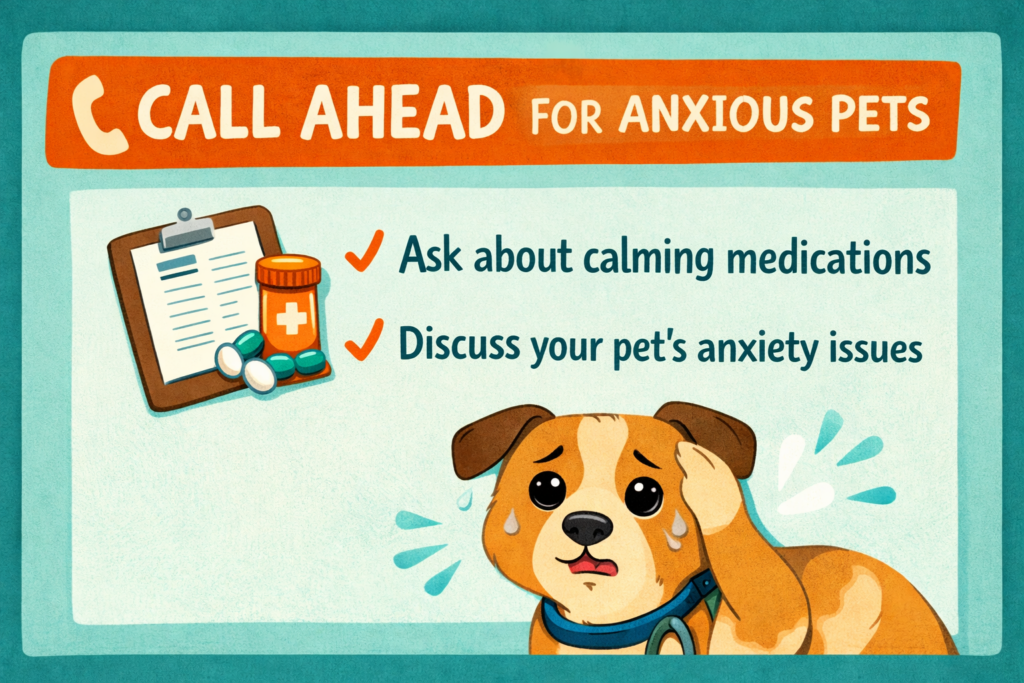
If Your Pet Gets Anxious, Call Ahead
Does your dog tremble in the lobby? Does your cat vocalize the entire car ride? You’re not alone.
Fear, anxiety, and stress (often abbreviated FAS in veterinary medicine) are extremely common during veterinary visits. The good news? We can help.
📞 Ask About Pre-Visit Medications
Call your veterinary team ahead of time if your pet:
- Has previously needed multiple staff members for restraint
- Tries to bite or scratch
- Becomes extremely vocal or shuts down
- Has had a traumatic vet experience
Your veterinarian may prescribe pre-visit pharmaceuticals such as trazodone, gabapentin, or other calming medications that are safe and effective when used appropriately.
These medications:
- Reduce stress hormones
- Improve exam quality
- Help prevent fear-based memories
- Keep both your pet and veterinary staff safe
It’s not “drugging your pet.” It’s practicing fear-free medicine.
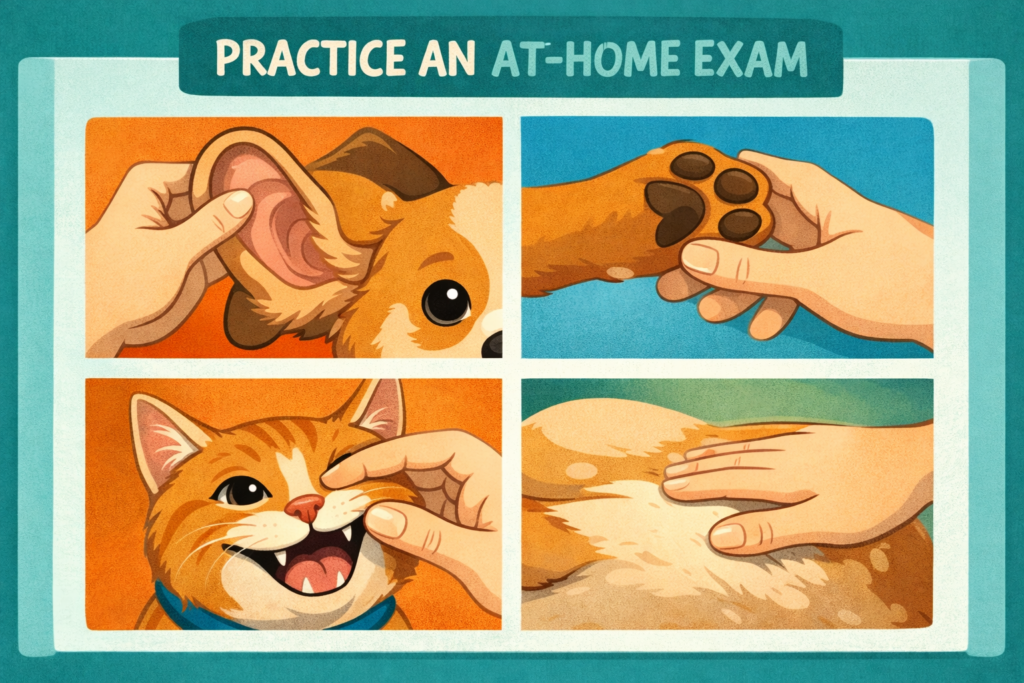
Practice the “At-Home Exam” Before You Go
One of the best ways to prepare? Desensitization.
Veterinarians perform a nose-to-tail examination, which means we gently:
- Lift lips to examine teeth
- Look inside ears with an otoscope
- Palpate the abdomen
- Feel lymph nodes
- Manipulate joints
- Touch paws and nails
If your pet isn’t used to these touches, they may react defensively.
🏠 Try This at Home:
A few times per week:
- Gently lift your pet’s lips and praise them.
- Look in their ears briefly.
- Touch and hold each paw.
- Run your hands along their belly and chest.
- Lightly open their mouth.
Pair each interaction with treats or positive reinforcement.
This builds tolerance—and confidence.
Bonus: You may also detect early signs of issues like ear infections, dental disease, or skin abnormalities.
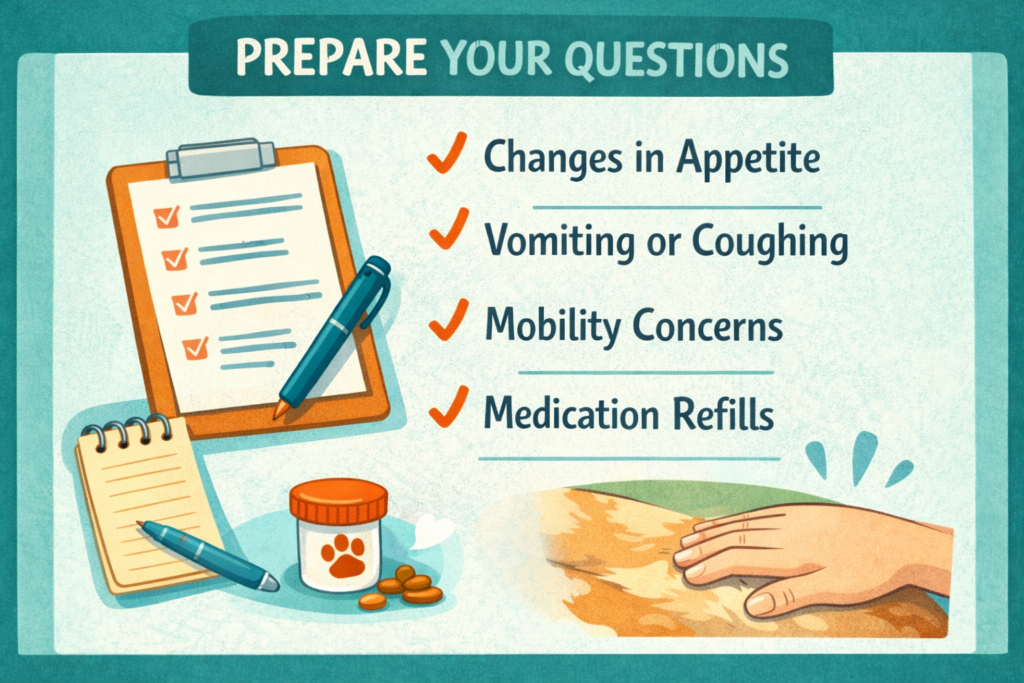
Prepare Your Questions Ahead of Time
Appointments can feel fast—especially when your pet is excited (or stressed).
Before you go, write down:
- Changes in appetite or thirst
- Vomiting, diarrhea, coughing, or sneezing
- Behavior changes
- Mobility concerns
- Diet and supplements
- Medication refill needs
Even small changes can provide important diagnostic clues.
Helpful Tip:
If possible, bring:
- A stool sample (if GI issues are suspected)
- Videos of abnormal behaviors (like coughing or limping)
- A list of current medications and dosages
Your veterinarian relies heavily on your observations. You know your pet best.
Make the Trip Less Stressful
Some quick bonus tips:
- Use a sturdy carrier for cats (top-loading if possible)
- Leave the carrier out days before the visit
- Take short “practice car rides”
- Avoid feeding a large meal immediately before travel (unless instructed otherwise)
- Bring favorite treats or a familiar blanket
Small adjustments can make a big difference in stress levels.
Be Honest and Open
There is no judgment in the exam room.
Whether it’s missed doses of medication, diet inconsistencies, or behavior challenges—we’re here to help, not criticize. Open communication allows us to tailor care to your pet’s real life.
🐾 Final Takeaway
A successful vet visit isn’t about perfection—it’s about preparation.
When you:
- Call ahead about anxiety
- Practice handling at home
- Prepare thoughtful questions
You empower your veterinary team to provide the best care possible.
And your pet? They’ll thank you with calmer visits and healthier years ahead.


Click Here to Visit Our Online Store

Hurricane Updates!


 Call Now!