


Why Flea, Tick & Heartworm Prevention Is Year-Round in Louisiana
If you live in Louisiana, you already know our winters aren’t really winters. Mild temperatures, high humidity, and frequent rainfall create the perfect environment for parasites to thrive all year long. That’s why veterinarians strongly recommend continuous flea, tick, and heartworm prevention—12 months a year.
Below is why skipping even “just a couple months” can put your pet at serious risk.
🦟 Heartworm Disease: A Constant Threat
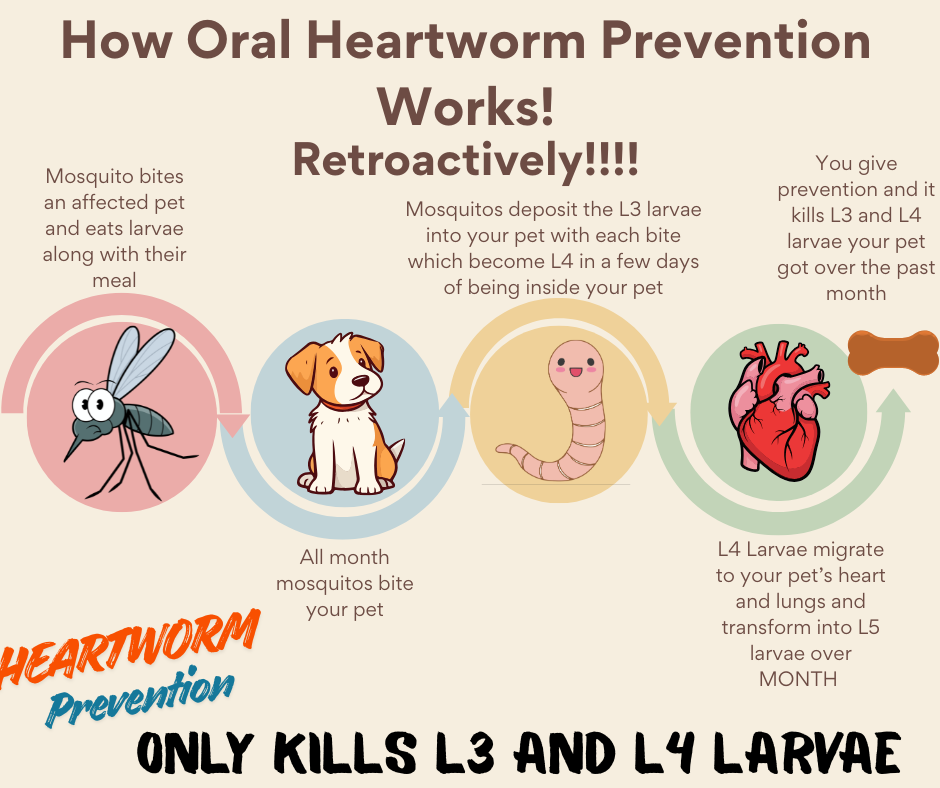
Heartworm disease is transmitted by mosquitoes, and unfortunately, mosquitoes never truly go away in Louisiana.
Why year-round matters:
- Mosquitoes can be active any time temperatures are above ~50°F
- Louisiana has mosquito activity even in winter
- Heartworm prevention works retroactively—missed doses create dangerous gaps
- Treating heartworm disease is expensive, lengthy, and risky, especially for dogs
💡 Important: There is no safe treatment for heartworms in cats—prevention is the only protect
🐜 Fleas Don’t Take a Winter Break
Fleas thrive in warm, humid climates, which makes Louisiana ideal for year-round infestations.
Why fleas are a year-round problem:
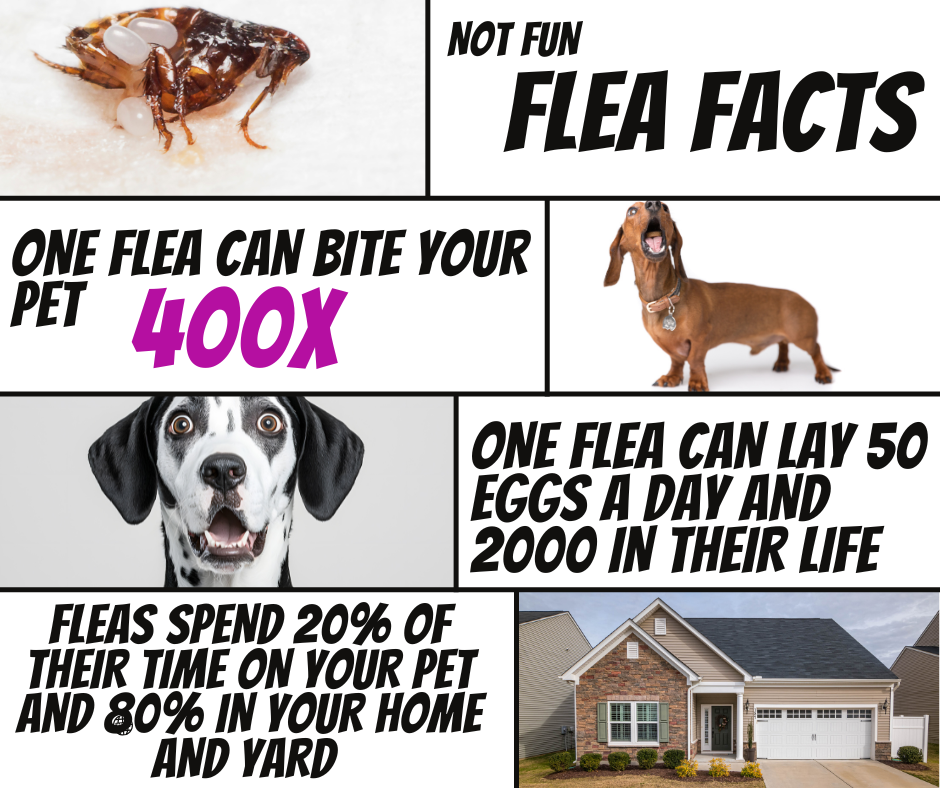
- Fleas live indoors and outdoors
- Eggs can survive in carpets, bedding, and furniture
- A single flea can lay up to 50 eggs per day
- Indoor pets are not protected just because they don’t go outside
Health risks from fleas include:
Anemia (especially dangerous for puppies and kittens)
Severe itching and skin infections
Flea allergy dermatitis
Tapeworm transmission
🕷️ Ticks Are Active Longer Than You Think
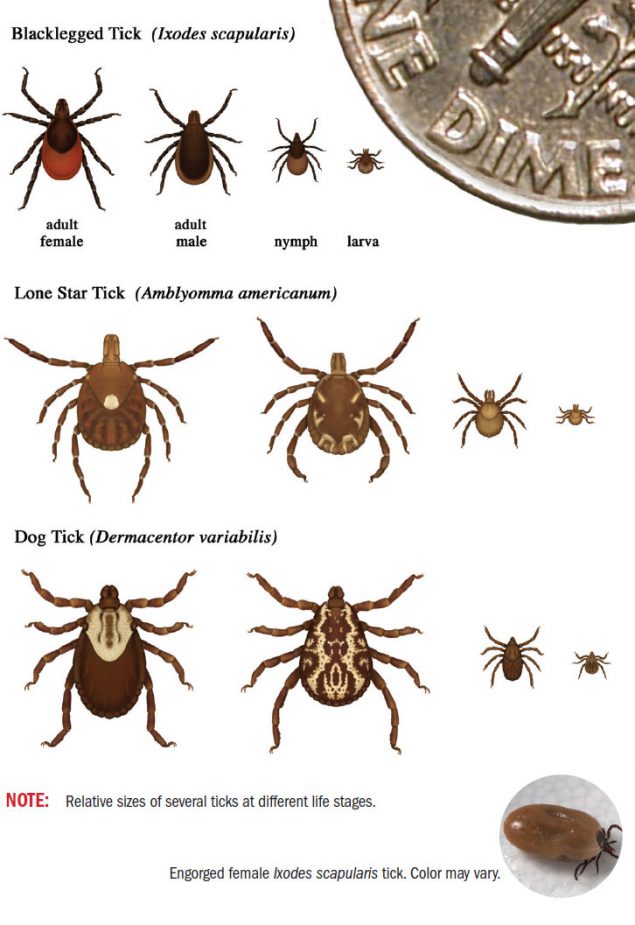
Ticks in the South remain active far beyond what most people consider “tick season.”
Tick risks in Louisiana include:
- Exposure during walks, yard time, or hunting
- Hitchhiking indoors on people or other pets
- Transmission of serious diseases like Ehrlichia, Anaplasma, Lyme disease, and Babesia
Once attached, ticks can transmit disease in as little as 24 hours.
🏡 “But My Pet Stays Inside…”
Even indoor-only pets are at risk.
Parasites can enter your home by:
- Hitching rides on clothing or shoes
- Coming in on other pets
- Sneaking in through doors, screens, or open windows
We routinely see indoor cats with fleas and indoor dogs with heartworm disease.
❄️ Why Seasonal Prevention Isn’t Enough
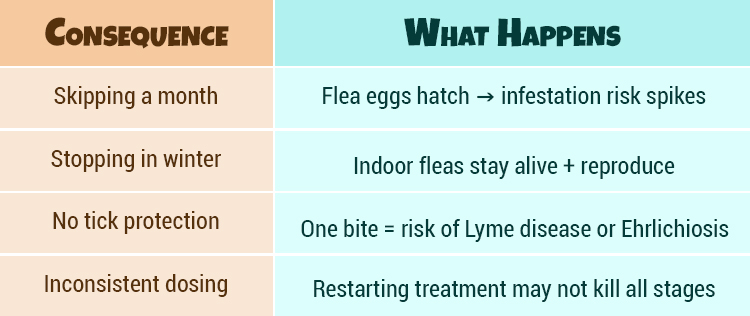
Stopping prevention during cooler months can:
- Allow immature parasites to survive and mature
- Create gaps in protection
- Increase resistance concerns
- Lead to preventable disease diagnoses months later
Consistency is key. Monthly or long-acting preventives work best when given on schedule, year-round.
❤️ Prevention Is Easier (and Cheaper) Than Treatment

Preventatives are:
- Safe
- Affordable
- Easy to administer
- Far less costly than treating advanced disease
Treatment for heartworm disease can involve:
Significant expense
Months of activity restriction
Painful injections
Risk of complications
🩺 Let’s Choose the Right Protection for Your Pet
Not all preventives are the same. We’ll help you choose:
- The safest option for your pet’s age, size, and lifestyle
- Products that protect against multiple parasites
- Options for pets with sensitivities or prior reactions
📞 Have questions or need refills? Our team is happy to help you keep your pet protected all year long.
Bottom Line
In Louisiana, parasites don’t follow a calendar—so prevention shouldn’t either.
Year-round flea, tick, and heartworm prevention is one of the simplest, most effective ways to protect your pet’s long-term health.
Your pet deserves protection every month of the year. 🐾