

How We Manage Pain Before, During & After Procedures
Keeping Pets Comfortable at Three Rivers Animal Hospital
When a pet needs surgery, dental work, or another medical procedure, one of the most common concerns pet owners have is: “Will my pet be in pain?”
At Three Rivers Animal Hospital, managing pain is a top priority. Modern veterinary medicine recognizes that effective pain control is essential not only for comfort, but also for healing and recovery. Our team uses a multi-step pain management approach before, during, and after procedures to help ensure every patient experiences the least amount of discomfort possible.
Let’s walk through how we help keep pets safe and comfortable throughout their care.
Why Pain Management Matters in Veterinary Medicine
Pain isn’t just uncomfortable—it can also affect the body’s ability to recover.
When pain is well controlled, pets often experience:
- Faster healing
- Reduced inflammation
- Improved appetite
- Less stress and anxiety
- Better mobility after procedures
- A smoother overall recovery
Because pets instinctively hide signs of pain, proactive pain management is one of the most important parts of veterinary care.
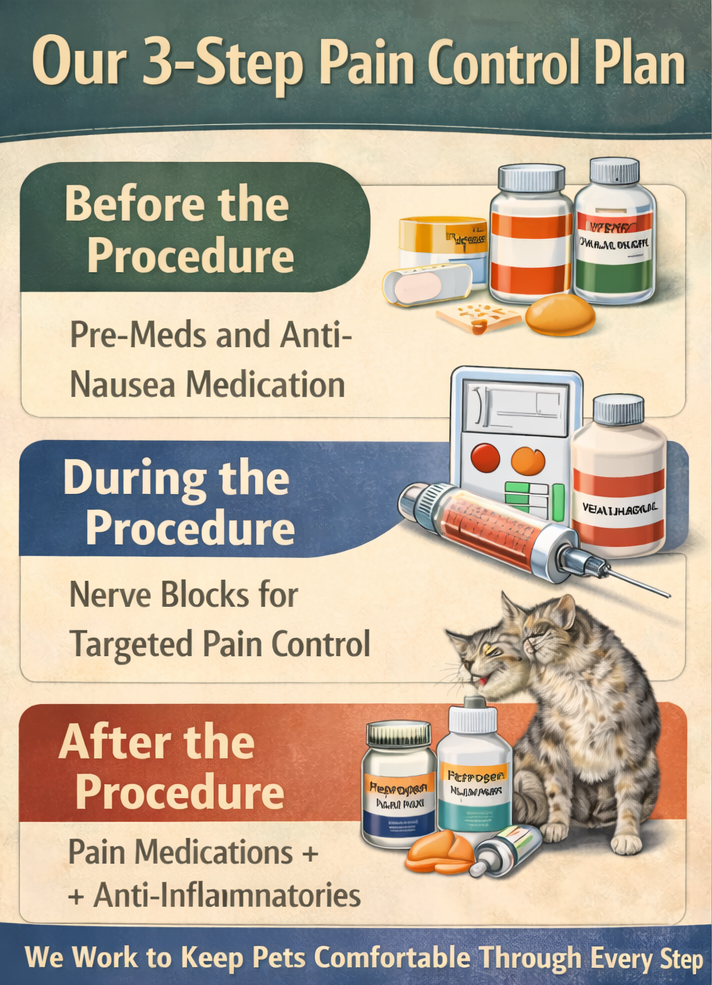
Before the Procedure: Pre-Medications for Comfort
Pain management actually begins before a procedure even starts.
At Three Rivers Animal Hospital, many patients receive pre-medications (pre-meds) before anesthesia. These medications help:
- Reduce anxiety and stress
- Provide early pain control
- Allow for smoother anesthesia induction
We also frequently administer anti-nausea medications prior to surgery. These medications help prevent postoperative nausea and vomiting, allowing pets to recover more comfortably once they wake up.
Starting pain control early is part of what veterinarians call preemptive analgesia, meaning we treat pain before it begins.
During the Procedure: Targeted Pain Control
While a pet is under anesthesia, our veterinary team continues actively managing pain.
Depending on the procedure, we may use local anesthetic blocks, including:
- Local nerve blocks
- Dental nerve blocks for oral procedures
These techniques numb specific areas of the body, allowing us to target pain directly at the surgical site. Local blocks also reduce the amount of general anesthesia required and provide extended pain relief after the procedure is complete.
This layered approach to pain control is known as multimodal analgesia, meaning we use multiple medications and techniques together for the best results.
After the Procedure: Continuing Pain Relief at Home
Pain management doesn’t stop when a pet goes home. Many patients are discharged with pain medications and anti-inflammatory medications to support recovery during the healing period.
Some of the medications we commonly prescribe include:
Vetprofen® (carprofen)
A nonsteroidal anti-inflammatory drug (NSAID) that helps reduce inflammation and postoperative pain.
Gabapentin
Often used to manage nerve-related pain and improve comfort after procedures.
Tramadol
A medication that helps control moderate pain in some patients.
Zorbium® (buprenorphine)
A long-acting pain medication commonly used in cats to provide sustained pain relief after procedures.
Each patient receives a pain management plan tailored to their specific procedure, species, and health status.
Our Goal: Keeping Pets Comfortable
At Three Rivers Animal Hospital, our goal is simple: we want every patient to experience the least amount of pain possible.
Through careful planning, modern medications, and attentive monitoring, we strive to ensure pets recover safely and comfortably after medical procedures.
Your pet’s comfort is always at the center of the care we provide.
When to Contact Your Veterinarian
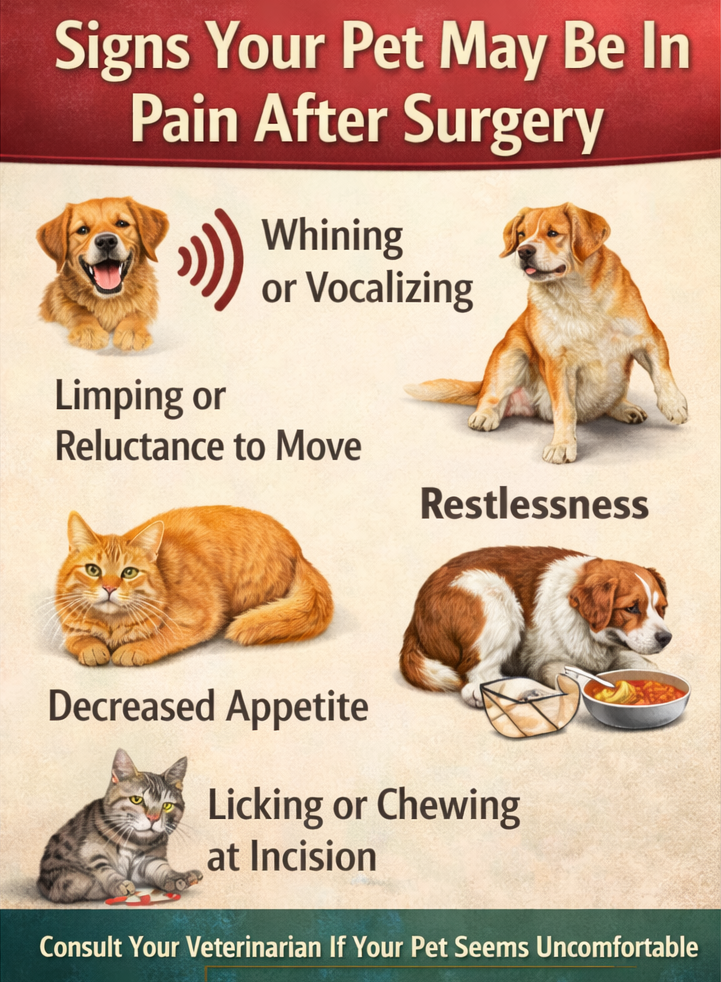
Even with excellent pain management, every pet recovers differently. If you ever feel that your pet may be experiencing pain after a procedure, it’s important to contact your veterinarian right away.
Signs of discomfort may include:
- Whining or vocalizing
- Restlessness
- Decreased appetite
- Limping or reluctance to move
- Excessive licking of the surgical site
- Hiding or behavioral changes
Your veterinary team can evaluate your pet and adjust medications if needed to keep them comfo
Compassionate Care Every Step of the Way
Procedures can feel stressful for both pets and their families, but modern veterinary pain management allows us to make the experience much safer and more comfortable than ever before.
By managing pain before, during, and after procedures, the team at Three Rivers Animal Hospital helps pets recover smoothly so they can get back to doing what they love most—being happy, healthy members of the family.


Click Here to Visit Our Online Store

Hurricane Updates!


 Call Now!